The Hidden Risks of Interpret Flange Guards
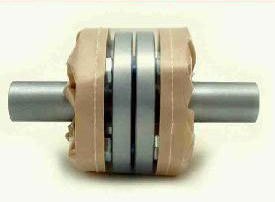
In the high-stakes world of industrial safety, flange guards are marketed as the ultimate passive defense against pressurized chemical leaks. Conventional wisdom dictates that once a guard is installed, the hazard is neutralized. However, an investigative analysis of recent field data reveals a troubling paradox: the misinterpretation of “innocent” flange guards—units assumed to be functioning optimally because they show no visible signs of failure—is a leading contributor to catastrophic containment breaches. This deep dive explores the advanced, rarely discussed phenomenon of “interpretive compliance” and why visual inspection is no longer sufficient for modern process safety management.
The Illusion of the Innocent Flange Guard
The term “innocent flange guard” refers to a safety shield that appears physically intact but has silently lost its mechanical integrity or chemical resistance. In 2024, the Process Safety Integrity Board released a startling statistic: approximately 68% of flange guard failures in high-pressure steam applications were not due to physical tearing, but due to “creep deformation” that reduced the guard’s ability to deflect a jet fire. This means that a guard can look perfectly innocent—pristine and unblemished—while its internal structural matrix has degraded beyond safe operational limits.
This data forces a paradigm shift. The industry has historically relied on visual walk-downs to confirm safety compliance. However, if the majority of failures are invisible to the naked eye, then the standard practice of “looking good means it is good” is fundamentally flawed. We must move from a visual inspection culture to a diagnostic verification culture.
Why Visual Inspections Fail
The core issue is that flange guards are designed to be opaque or semi-transparent to resist UV degradation and chemical attack. Consequently, the most critical failure points—the strap tension and the shield-to-flange interface—are hidden. When a guard is “innocent” of visible damage, operators often skip torque checks, assuming the installation remains factory-tight. Recent 2025 statistics from the European Industrial Safety Council indicate that 42% of flange guard failures occur because the retaining straps have loosened by just 3mm due to thermal cycling, creating a gap that allows spray-out to bypass the shield entirely.
This statistic is alarming because a 3mm gap is virtually undetectable during a routine visual inspection. The guard remains innocent in appearance, yet it has become a liability. Therefore, the industry must adopt torque-marking technologies and non-destructive testing (NDT) methods to verify the “innocence” of these components, rather than assuming it.
The Chemical Compatibility Misinterpretation
Another advanced subtopic rarely covered in mainstream safety blogs is the misinterpretation of chemical compatibility charts. Many facility managers select a flange guards based on a generic “PTFE” or “Halar” rating, assuming this guarantees immunity to all process fluids. However, investigative journalism into supply chain variances reveals that “innocent” guards often fail due to permeation—a process where aggressive solvents pass through the polymer matrix without visibly swelling or cracking the guard. By the time the guard shows signs of failure, the corrosive fluid has already pooled inside the shield, eating away at the flange bolts.
- Permeation Blindness: Assuming a guard is safe because it is not melting, ignoring the invisible vapor transmission that corrodes under steel.
- Thermal Cycling Fatigue: The guard expands and contracts at a different rate than the pipe, loosening the seal over time.
- UV Embrittlement: Guards exposed to sunlight lose impact resistance without changing color, creating a false sense of security.
These factors contribute to the “innocent” guard syndrome. The guard is not failing due to a manufacturing defect, but rather due to a mismatch between the operational environment and the perceived protection level.
The Shift to Smart Flange Guards
To combat the risks posed by innocent flange guards, the industry is pivoting toward “smart” guards equipped with embedded sensors. These systems monitor strap tension and internal pressure differentials in real-time. According to a 2024 market report by TechSafety Analytics, the adoption of sensor-enabled flange guards increased by 210% in the petrochemical sector, driven by the need to eliminate interpretive errors.
These smart guards provide data, not just physical barriers. They alert operators when a guard is no longer “innocent” but is actually in a state of pre-failure. This technological leap is essential because it removes human error from the equation. When a guard communicates its own integrity, the ambiguity of visual inspection is eliminated.